Menü
Apply now
 

Technical Assistant (f/m/d) for cell culture, flow cytometry and laboratory management

Specialty
Neurology

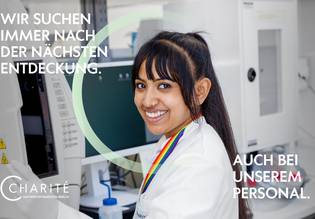
Charite Kampagne 1350x900 17 Entdeckung 2
Apply now
 

Work time
full-time

Start date
ab sofort /asap

Employment period
limited

Application deadline
06.11.2026

Deployment location Charité
Campus Charité Mitte

Jobcode
8361

Salary group
E9b


Working at Charité

You will work in the experimental research area of the Department of Neurology with Experimental Neurology at Charité – Universitätsmedizin Berlin, in the independent junior research group antibody & brain lab (Reincke lab). We study antibody-mediated and autoimmune diseases of the nervous system and develop antigen-specific immunotherapies from them. Our largest current project is the development of a CAAR-T cell therapy (chimeric autoantibody receptor) for the targeted elimination of autoreactive B cells in anti-NMDA receptor encephalitis, covering construct development, preclinical characterisation and preparation for first clinical use.

The group is deliberately interdisciplinary: clinicians, laboratory scientists and bioinformaticians work in the same group, and the working language of the laboratory is English. You can find out more about the team and its research at antibodybrainlab.com.

Overview of the position

As part of our team you will cover two areas of responsibility: you will run experiments independently, focusing on the CAAR-T cell project and on the production of recombinant antibodies, and you will own the laboratory management of the group.

Experimental work (focus on the CAAR-T cell project and on recombinant antibody production)

  • Culture primary human immune cells and cell lines, isolate PBMC and T cells from whole blood and leukapheresis material, and cryopreserve cell products.
  • Manufacture CAAR-T cells, including T cell activation, lentiviral transduction, expansion and quality control.
  • Establish and run multicolour flow cytometry panels to characterise transduction efficiency, phenotype and function, and analyse the data independently.
  • Perform functional assays, including cytotoxicity, degranulation and cytokine assays (e.g. ELISA, multiplex).
  • Produce recombinant monoclonal antibodies, including cloning into expression vectors, transient transfection of HEK or CHO cells and affinity purification.
  • Apply standard molecular biology methods, in particular cloning, plasmid preparation, DNA/RNA isolation and qPCR, as well as protein biochemistry methods such as Western blot.
  • Document your experiments carefully, write and maintain standard operating procedures, and present your results in the group meeting.

Laboratory management

  • Take on laboratory administration, in particular ordering, the consumables budget overview, and stock and chemicals management.
  • Look after the group’s instruments, coordinate maintenance, calibration and service visits, and act as the contact person for the core facilities.
  • Train new staff, doctoral students and students on instruments and methods, and introduce them to the standard workflows of the laboratory.
  • Support laboratory and biological safety, including documentation of genetically modified organism work (safety levels S1/S2), safety briefings under the German BioStoffV and GenTSV regulations, and liaison with the biological safety officer.
  • Organise sample logistics and the management of our biosamples, including cerebrospinal fluid and blood samples from ongoing clinical studies.

What we are looking for

Requirements

  • Completed training as a biological, chemical or medical laboratory technician (BTA, CTA, MTA, MTLA) or a comparable qualification, for example a Bachelor’s degree in biology, biotechnology or biomedicine.
  • Hands-on experience in sterile cell culture, ideally with primary human immune cells.
  • Hands-on experience in flow cytometry, including independent acquisition and analysis.
  • Confident command of standard molecular biology and protein biochemistry methods.
  • The ability to run experiments independently after the initial training period, to plan them and to assess results critically.
  • Strong organisational skills, careful documentation and an interest in taking on a coordinating role within the team.
  • Very good spoken and written English. German is not required.

Strong plus

  • Experience with primary T cells, with lentiviral vectors or with biosafety level 2 work.
  • Experience with CAR or CAAR-T cells, with cellular immunotherapies or with work under GMP-like conditions.
  • Experience in the production and purification of recombinant antibodies or proteins, including transient transfection and affinity chromatography.
  • Experience with spectral flow cytometry, panel design or cell sorting.
  • Experience with limited or low-input clinical material such as cerebrospinal fluid or fine-needle aspirates.
  • Experience in laboratory management at a university hospital, in particular with procurement systems.
  • Interest in neuroinflammatory and autoimmune disease.

Charité offers you

  • A translational project that runs from the patient sample through preclinical development to the planned first clinical use of a new cell therapy.
  • A central, self-directed role in a growing junior research group with short decision paths and real personal scope.
  • Work in a highly motivated, interdisciplinary team spanning clinic, laboratory and bioinformatics, and embedding in the DFG-funded Clinical Research Unit BECAUSE-Y.
  • Training in modern, state of the art laboratory methods, access to the core facilities for cytometry and sequencing, and the broad continuing education programme of Charité.
  • Co-authorship on scientific publications.
  • Intercultural team events and a well-structured onboarding with friendly colleagues.
  • An occupational pension scheme providing additional security in retirement.
  • Charité has been certified as a family-friendly university and employer since 2007 - you can find more information here
  • Consideration of your scheduling preferences; no weekend shifts.

Information regarding the position

  • Pay grade E9b TVöD VKA-K. You can find all information about salary and the collective bargaining agreement here.
  • Working hours: Full-time, 38.5 hours per week
  • The position is fixed-term until December 31, 2027, as it is tied to the duration of the project
  • We offer 30 days of annual leave as standard
  • Application deadline: November 6, 2026
  • Job reference number: 8361

Application


Everyone is welcome at the Charité, regardless of age, religion, gender, gender identity, sexual orientation, nationality, disability, ethnic or social background. We are committed to equal opportunities and inclusion.

For data protection reasons, we only accept applications via our application portal. The contact details provided below are intended solely for inquiries.

Apply now

If you have questions, please contact:

Dr. med. S. Momsen Reincke
momsen.reincke@charite.de

More information

Data protection information

The Charité would like to point out that personal data is stored and processed at various locations at the Charité premises (e.g. specialty department, personnel representatives, HR department) as part of and for the purposes of the application process. Furthermore, the data may be transferred or processed within the group and to external bodies (e.g. authorities) to protect legitimate interests. By submitting your application, you agree to our data protection policy and terms of use for application procedures, which you can find here.

Additional information

Charité – Universitätsmedizin Berlin makes its personnel decisions based on suitability, ability and professional performance. The Charité aims to increase the proportion of women in management positions and therefore strongly encourages women to apply. Women with equivalent qualifications will be given priority within the scope of legal possibilities. Applications from people with a migration background who meet the recruitment requirements are expressly encouraged. Severely disabled applicants with equal qualifications will be given preference. A police good-conduct certificate, in some cases an extended good-conduct certificate, is required at the time of recruitment. Unfortunately, application documents can be returned only if a sufficiently stamped envelope is enclosed. Any incurred travel expenses cannot be reimbursed.